|
|
|
|
|
|
|
|
 |
 |
 |
 |
 |
 |
 |
 |
 |
 |
 |
 |
 |
 |
|
| THIS ITEM IS INCLUDED IN OUR BUY ONE GET ONE HALF PRICE OFFER ! Choose any two prints in this special offer and the lower priced item is half price. (Any free bonus prints already supplied with an item are separate and will also be included !) Hundreds of items across our websites are included in this offer! |
| |||||||||||||||||||||||||||||
| |||||||||||||||||||||||||||||||||||||||
| Signatures on this item | |
| *The value given for each signature has been calculated by us based on the historical significance and rarity of the signature. Values of many pilot signatures have risen in recent years and will likely continue to rise as they become more and more rare. | |
| Name | Info |
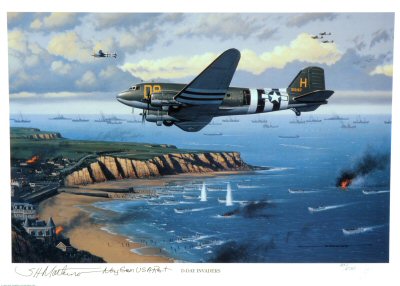
  Major General S H Matt Matheson (deceased) *Signature Value : £50 | Born in Seattle Washington on August 11, 1920, General Matheson graduated from the University of California at Los Angeles, and was commissioned as a Second Lieutenant in the Infantry Reserve in 1942. He joined the 506th Parachute Infantry of the 101st Airborne Division after graduation. This is the unit made famous by historian Stephen Ambrose in his 1992 novel Band of Brothers. General Matheson participated in the D-Day invasion at Normandy, the liberation of Holland, the defense of Bastogne, and the seizure of the Berchtesgarden area. Following WW 11 he served in various command and staff positions in the 82nd Airborne Division. During the Korean War, General Matheson was the G-3 Plans Officer of the X Corps and participated in the landings at Inchon and Wonsan, as well as the amphibious withdrawal at Hungnam. Following a tour of duty with the XVIII Airborne Corps, he was assigned to the US Army Europe as Assistant Chief of Staff, G-3, for the 1 st Infantry Division. In 195 8 General Matheson was assigned to the 101st Airborne as Deputy Battle Group Commander, and then later as Assistant Chief of Staff, G-3. General Matheson returned to Europe in 1961 as Commander of the 10th Special Forces. After being reassigned to the States, Matheson became Assistant Division Commander of the 101st Airborne Division, and then assumed command of the Ist Brigade of the 101st Airborne division in Vietnam. Following his tour of duty in Vietnam, General Matheson was put in command of Fort Campbell. Later, the General served in Korea again, as Commander of the 2nd Infantry Division. Returning to the United States in 1970, he served as Director of the International Staff, International American Defense Board. In 1971 Matheson moved to Fort M0herson and served as Chief of Staff, Third U.S. Army. Prior to his retirement in 1975 General Matheson commanded the Army Readiness Region IV. General Matheson, who was one of the first paratroopers dropped during the D-Day invasion, made more than one hundred parachute jumps during his career, and his numerous decorations include the Distinguished Service Medal with Oak Leaf Cluster, the Legion of Merit, the Distinguished Flying Cross, four Bronze Stars, twelve Air Medals, the Army Commendation Medal, the Purple Heart, Master Parachutist Badge, and third Combat Infantry Badge. His foreign awards include the Belgian Fourragere, Bronze Lion of the Netherlands, Orange Lanyard of the Netherlands, National Order of Vietnam (5th Class), Vietnamese Cross of Gallantry with two palms, Republic of Korea Order of National Security, and Vietnamese Civic Actions Honor Medal. General Matheson, who passed away on January 8, 2005, resided in Carmel, California in his later years. Like many men of his 'greatest generation' General Matheson was a modest man who didn't boast of his achievements during WW 11. |
| The Aircraft : | |
| Name | Info |
| Dakota | DOUGLAS DAKOTA, Transport aircraft with three crew and can carry 28 passengers. speed 230-mph, and a altitude of 23,200 feet. maximum range 2,100 miles. The Douglas Dakota served in all theatres of world war two, The Royal Air Force received its first Douglas Dakota's in April 1941, to 31 squadron which was serving in India. These were DC2, later DC3 and eventually C-47 Dakotas were supplied. The Douglas Dakota was developed from the civil airliner of the 1930's. The Royal Air Force received nearly 2,000 Dakotas, But many more than this served in the US Air Force and other allied countries. The last flight of a Douglas Dakota of the Royal Air Force was in 1970. You can still see Douglas Dakota's in operational and transport use across the world. |
|
Contact Details |
|
Sign Up To Our Newsletter!
This website is owned by Cranston Fine Arts. Torwood House, Torwoodhill Road, Rhu, Helensburgh, Scotland, G848LE Contact: Tel: (+44) (0) 1436 820269. Email: cranstonorders -at- outlook.com |
 |


 Buy 1 Get 1 Half Price!
 Matheson, S H Matt

 Matheson, S H Matt