

Please note that our logo (below) only appears on the images on our website and is not on the actual art prints.

|
|
Crew Signed Lancaster Prints by Anthony Saunders and Ivan Berryman.
PCK1219. Crew Signed Lancaster Prints by Anthony Saunders and Ivan Berryman. Aviation Print Pack.
Items in this pack :
Item #1 - Click to view individual item
DHM0434B. Lancaster Dawn by Anthony Saunders. Depicts a 103 squadron Lancaster returning from a night-time bombing mission. Signed by Flt Eng William (Bill) Higgins (deceased)
and
Gunnery Leader Sgt Alistair Lamb. Higgins / Lamb RAF signature series of 100 prints from the signed limited edition of 850 prints. Image size 19 inches x 12.5 inches (48cm x 32cm)
Item #2 - Click to view individual item
DHM1719E. Avro Lancaster B.1 by Ivan Berryman. R5689 (VN-N) - a Lancaster B.1 of 50 Squadron based at Swinderby. This aircraft crash-landed in Lincolnshire while returning from a mission on 19th September 1942, after both port engines failed as the aircraft was preparing to land. The aircraft never flew again. The crew on the final mission were :
Sgt E J Morley RAAF,
P/O G W M Harrison,
Sgt H Male,
Sgt S C Garrett,
Sgt J W Dalby,
Sgt J Fraser
and
Sgt J R Gibbons RCAF, the sole member of the crew killed in the crash. Signed by Flt Lt Don Briggs DFM. Briggs signature edition of 100 prints (Nos. 901 - 1000) from the signed limited edition of 1150 prints. Image size 17 inches x 12 inches (43cm x 31cm)
Website Price: £ 170.00
To purchase these prints individually at their normal retail price would cost £250.00 . By buying them together in this special pack, you save £80
All prices are displayed in British Pounds Sterling
|
|
|
| Signatures on this item | | *The value given for each signature has been calculated by us based on the historical significance and rarity of the signature. Values of many pilot signatures have risen in recent years and will likely continue to rise as they become more and more rare. | | Name | Info | 
Flt Eng William (Bill) Higgins (deceased)
*Signature Value : £15 (matted)
| Flt Eng William (Bill) Higgins Born in Plymouth, Devon, joined the RAF at the age of 17 and became a flight engineer on Lancaster with 195 Squadron.in October 1944. whihc flew from RAF Wratting Common. Bill Higgins flew on most missions that 195 Squadorn took part in including there last mission on the 24th April 1945 the bombing of Railway facilites at Bad Oldesloe. and also took part in the supply drops to the Dutch at The Hague on the 7th May 1945. After the war end Bill transferred to air traffic control in Occupied Germany durign the Belrin Airtlift. and after leaving the RAF, Joined the civil servcie and worked onRadar, including the intallation of radar on HMS Cavalier in Singapore.
| 
Gunnery Leader Sgt Alistair Lamb
*Signature Value : £30 (matted)
| Alistair Lamb, born in Stirling, Scotland, joined the Royal Air Force in March 1944 and went to No.7 Gunnery School at Stormydown in Wales. In August 1944 he went to Market Harborough and started training in Ansons before moving on to Wellingtons. Alistair went to H1654 heavy conversion unit at Wigsley flying in Stirlings and Lancasters. In March he joined No.15 Squadron at Mildenhall and participated in amongst other operations Operation Manna dropping food supplies to the Dutch, on the 30th April 1945 over Rotterdam, 2nd May 1945 over The Hague and 7th May 1945 at Valkenburg. Sgt Alistair lamb and the rest of the crew also took part in Operation Harken Project, photography of U-Boat Pens at Farge. After the war Sgt Alistair Lamb stayed with 15 Squadron at RAF Wyton on Lincolns until August 1947 when he left the RAF and joined the Civil Service. Alistair Lamb still lives in his home town of Stirling.
Recollections of Operation Manna by Rear Gunner Alistair Lamb :
This highly successful operation perpetuated by RAF Bomber Command gave life and hope to the 3.5 millions of starving Dutch people held in the German occupied area of West Holland. A total of 2,835 Lancasters and 124 Mosquito flights were made, dropping 6,672 tons of food up to 8th May 1945 when the Germans surrendered. I was a member of 15 Squadron, my Pilot was Flying Officer Jack Darlow and I was the Rear Gunner for his crew. Jack now resides in Australia (although he is French) and my Navigator was Alf Porter. Alf and I have both visited our skipper in Australia. We carried out our first food-dropping operation on 30th April 1945 over Rotterdam and the flight time was 2 hours 45 minutes. The second flight was to The Hague on 2nd May 1945, flight time 2 hours 35 minutes. The third operation was to Valkenburg on 7th May 1945, the flight time being 2 hours 45 minutes. The Lancaster aircraft on the first trip was LS-P NG364, on the other trips we flew Lancaster LS-Z 4K765 our own aircraft. LS-P joined 15 Squadron on 25/11/44 survived the war, and went back to Avro in October 1945. LS-Z joined 15 Squadron in Feb 1945, also survived the war being S.O.C in October 1946. On the Rotterdam trip on 30/4/45, the load was flour, cheese, dried egg, peas, carrots & cigarettes. The drop area was 2 1/2 miles N.E. Rotterdam centre, it was a well-concentrated drop, with no congestion over the drop zone. Large numbers of women and children were in the drop zone despite the fact that the Germans had threatened to shoot those who had gathered to collect food. The marker flares had set fire to a house North of a square of water. The second trip to The Hague on 2/5/45 was a very good drop with no congestion of aircraft. The load was the same as the previous drop of 30/4/45. The drop Zone was a Sports Track 2 miles North of the Hague centre. Load and conditions on the third drop were similar to the earlier trips. In the Rotterdam area, British and Dutch flags were in greater evidence than the other trips. Less number of Germans observed here than in other sorties. We were never above 500 feet, and mostly at 50 feet flying over Holland, so it was easy to observe all the activity on the ground. The Dutch people gave us a tremendous reception as we flew overhead, and we saw lots of Allied flags (banned until now) being waved along with the now famous V sign. It was a great thrill to fly only 500 feet all the way from England uninterrupted, and only 50 feet above Holland. These operations were completed before the Germans finally surrendered, and to my knowledge no aircraft were fired at. What a wonderful way to end one's operational flying - although we had to wait until August 1945 to see peace at last.
 
Left : Alistair Lamb with the original painting 'Operation Manna', which depicts the aircraft in which he was a rear gunner dropping food parcels near The Hague. Right : Alistair Lamb signing the print Distant Dispersal by Graeme Lothian.
 
Left : Loading soldiers into Lancasters at Pomigliano dArco, Italy in August 1946 to bring them home. Right : Alistair Lamb in the rear turret of his Lancaster.
|
| Signatures on item 2 | | *The value given for each signature has been calculated by us based on the historical significance and rarity of the signature. Values of many pilot signatures have risen in recent years and will likely continue to rise as they become more and more rare. | | Name | Info | 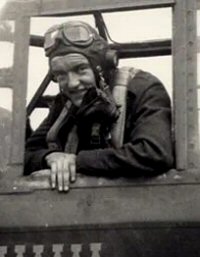

Flt Lt Don Briggs DFM (deceased)
*Signature Value : £40 (matted)
| Don Briggs spent two years at RAF Halton qualifying as an engine fitter before serving on RAF flying units until he volunteered in December 1943 for the new aircrew trade of Flight Engineer. After a period of training he joined No.156 Squadron equipped with the Lancaster. The unit was part of Bomber Command's Pathfinder Force. The flight engineer was the pilot's mate who managed the engines, fuel systems and the ancillary equipment. He teamed up with Flying Officer Bill Neale and they were to complete sixty-two bombing operations together. Their first sortie was on June 11th, 1944 when Bomber Command was attacking targets in support of the Allied landings in Normandy. Railway marshalling yards, supply dumps and construction sites for the V-1 flying bombs and storage sites for the V-2 rocket were their primary targets. By late August, Bomber Command resumed its campaign against the industrial cities in Germany and Briggs attacked Russelheim, Kiel, Stettin and cities in the Ruhr. His crew marked targets with flares to allow the main force to mount accurate attacks. After the war, Briggs flew long-range transport sorties in York aircraft (based on the Lancaster) before spending three years at the Empire Test Pilot's School at Farnborough. In July 1951 he started training as a pilot and, after converting to jets, he joined the newly-formed No.10 Squadron to fly the twin-engine Canberra bomber. In August 1955 he trained on the first of the RAF's V-bombers, the Valiant. He joined the first squadron, No.138, and a year later he transferred to No.49 Squadron, which was being formed for the task of conducting the nuclear weapons trials in the Pacific. Operation Grapple was mounted in 1957 to test Britain's first thermonuclear megaton weapon, the Hydrogen Bomb. The site chosen for the test was Malden Island 400 miles south of Christmas Island in the South Pacific. Briggs was the second pilot in the crew of Squadron Leader Arthur Steele. They flew their Valiant bomber to the newly constructed airfield on March 18, 1957 and began a period of intensive training. On May 15th, No.49 Sqn's commanding officer, Wing Commander Ken Hubbard, dropped the first weapon successfully. For the second drop on May 31st, Steele, Briggs and their crew flew the reserve aircraft and for the third and final test, they were tasked for the sortie. On June 19th, they took off and climbed to 45,000 feet, and carried out a practice run over the target before clearance to drop the bomb was given. Fifty seconds after release, the bomb exploded at the pre-determined height of 8,000 feet. Steele and Briggs had erected the anti-flash screens in the cockpit of their aircraft before making a precisely executed turn away from the explosion and before the shock wave was felt in the aircraft. The drop was completely successful. A few days after their flight, the squadron returned to Wittering. By the end of the year, Briggs had completed a Valiant captain's course and he transferred to No.138 Squadron where he spent the next three years. This was followed by almost three years as a pilot instructor on Valiants and it was during this period he also converted to the Victor bomber. In 1964 he trained as a flying instructor and spent three years instructing trainee pilots at an RAF flying school near Newark. In January 1967 he converted to the third of the RAF's V-bombers, the Vulcan, and was to spend the next five years as an instructor on the iconic delta-wing aircraft before joining No 9 Squadron shortly before it moved to its new base in Cyprus. After 34 years service, he retired at the end of 1973. There were 88 Vulcan 2s produced and Briggs flew 57 of them during his seven years with the force. He spent 15 years at the Oxford Air Training School training pupils to become commercial airline pilots. He retired aged 65 when he joined the RAF Microlight Association at Halton where his RAF career had begun and where he became the chief flying instructor. Finally, at the age of 84 he decided to finish his flying career having flown 71 different types of aircraft and gliders. He died in July 2018.
|
|


