|
|
|
|
|
|
|
|
 |
 |
 |
 |
 |
 |
 |
 |
 |
 |
 |
 |
 |
 |
|
| |||||||||||||||||||||||||||||||
| |||||||||||||||||||||||||||||||||||||||||||||||||||||||||||||||||||||||||||||||||||||||||
| Signatures on this item | |
| *The value given for each signature has been calculated by us based on the historical significance and rarity of the signature. Values of many pilot signatures have risen in recent years and will likely continue to rise as they become more and more rare. | |
| Name | Info |
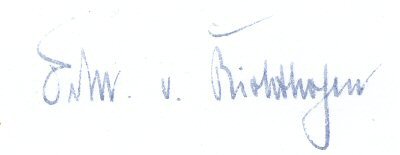
  Manfred von Richthofen (deceased) *Signature Value : £1050 (matted) | The legendary Red Baron was the most successful flying Ace of World War One, with over 80 confirmed victories. With his aircraft painted bright red, this brilliant tactician and leader served with Jasta 11 before commanding the new, much larger wing, Jagdgeschwader I, soon to earn the immortal nickname of Richthofens Flying Circus. On 21st April 1918, during a low level aerial duel, Manfred von Richthofen was fatally struck by a single .303 bullet, believed to have been fired from the trenches below. He was buried by his Allied opponents with full military honours. Where do signatures of the Red Baron come from? These rare signature pages and signature clippings are sourced by one of the leading German autograph companies on behalf of Cranston Fine Arts. The majority of the signatures of Manfred von Richthofen were signed in January - February 1918 on promotional train journeys across Germany to aid the recruitment by order of the Kaiser, with the train stopping at most train stations, where the Red Baron would sign autographs for the large crowds gathered. On these two, 3-day journeys, it is estimated he signed between 1500 - 2000 autographs each day. He would also have signed many hotel guest books along with other top Aces and on rare occasions you can find two or three of these signatures together. |
| The Aircraft : | |
| Name | Info |
| SE5 | The third S.E.5 produced (A4563) became, in effect, the prototype S.E.5a with a 200hp Hispano Suiza power plant and shorter span wings. The S.E.5.a went to No56, No.40 and No.60 squadrons from June 1917, and by the end of the year No's 24, 41, 68 and 84 squadron had taken them on charge. After troubles with the reduction gear of the Hispano Suiza together with a general shortage of these power plants, the direct drive Wolseley Viper became the standard S.E.5a power unit. The S.E.5.a built a fine reputation for strength, performance and general flying quality, which together with the Sopwith Camel was the main reason for the Allies gaining and maintaining air superiority during 1918. Some aircraft were fitted with four 25lb (11kg) Cooper bombs on under fuselage racks. The S.E.5.a also service in the Middle East and several home defence units in 1918. At the end of World War I over 2,000 S.E.5.a aircraft were in service with the RAF. The type had served with 24 British, 2 US and 1 Australian Squadrons. After its 'demob' 50 of these aircraft were supplied to Australia, 12 to Canada with several more to other countries including South Africa, Poland and the United States of America. 50 came onto the British register and were used for developing the art of sky-writing. The S.E.5.a will always remain one of aviation's great warplanes. |
| Fokker_Dr.I | |
|
Contact Details |
|
Sign Up To Our Newsletter!
This website is owned by Cranston Fine Arts. Torwood House, Torwoodhill Road, Rhu, Helensburgh, Scotland, G848LE Contact: Tel: (+44) (0) 1436 820269. Email: cranstonorders -at- outlook.com |
 |


 Richthofen, Manfed von
  (matted)